
ADOC Releases for Chilton Sentences
The Alabama Department of Corrections is a statewide prison system, not a Chilton County jail facility. A person sentenced from a Chilton County court may be transferred from the county jail to ADOC and later released, paroled, discharged, or placed on mandatory supervision from a prison or community facility outside the county. The county jail release record can show the transfer out of local custody, but the state release path belongs to ADOC and ABPP.
This distinction matters because the sheriff's 48-hour released roster is built around releases from the Chilton County Detention Center. It does not create a long-term state-prison discharge record. A state prisoner may show in ADOC while currently incarcerated, then stop appearing after release because ADOC states that historical data is not available online through the public inmate search.
Confirm an ADOC Release
Start with the ADOC inmate search while the person may still be in state custody. ADOC accepts AIS number, first name, and last name. The AIS number is the quickest identifier and takes precedence over name fields. Name searches can be broad, and ADOC displays no more than 50 records at a time.
- Search by AIS when known, or by first and last name when AIS is unknown.
- Capture location, AIS, sentence details, Minimum Release Date, parole consideration date, and parole status if shown.
- If no result appears, remember that the public ADOC database is current-custody only.
- Use ADOC public records, the Chilton County Circuit Clerk, Alabama VNS, or ABPP for post-release confirmation.
- If the case is not state custody, use BOP, ICE, or the county jail record instead.
The ADOC search page screenshot below shows the statewide search channel used for state-prison custody.
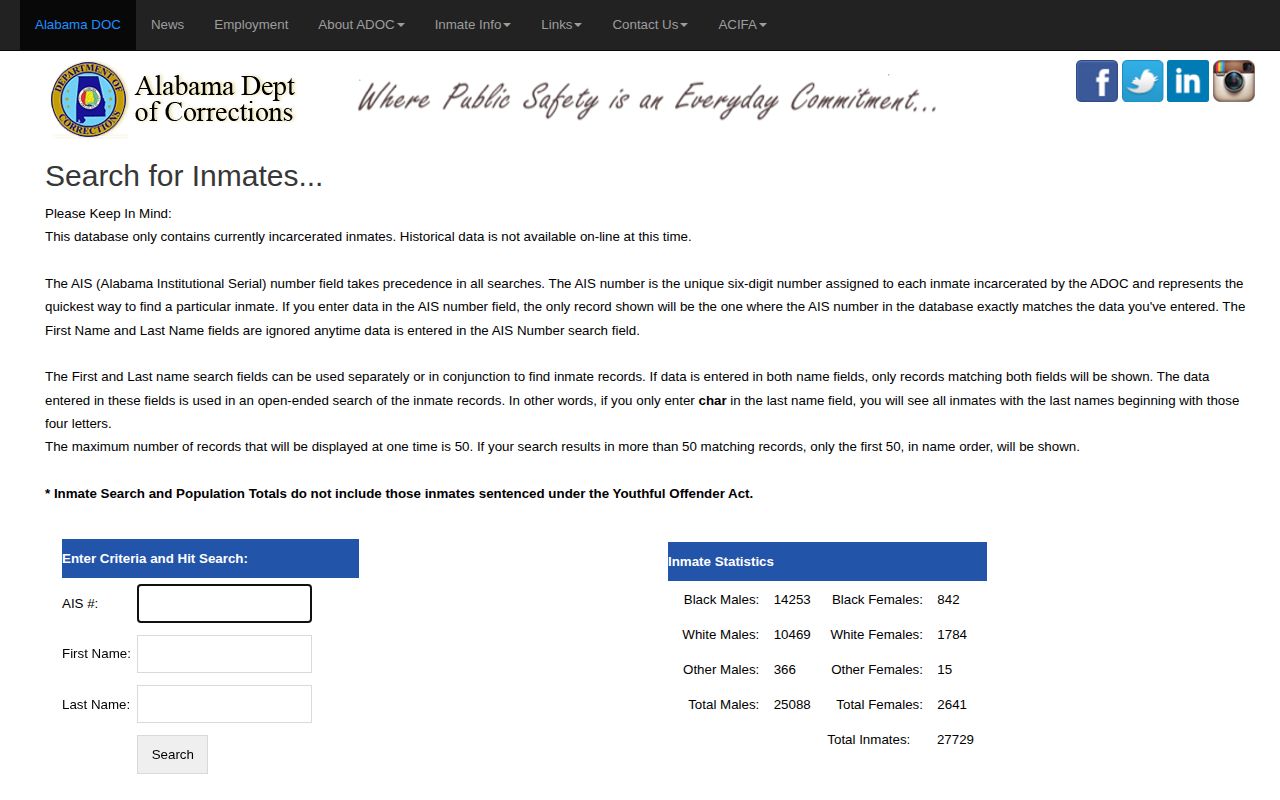
Use this image as context for the search form, not as proof that a released person will remain searchable after discharge.
Minimum Release Date Records
ADOC uses the label "Minimum Release Date" for the earliest scheduled date an inmate can be released to probation or end of sentence. ADOC also warns that the date can change because of disciplinary actions that take away good time, new cases from the circuit clerk, or changes to the current sentence. For a Chilton County sentence, jail credit is prepared by the sentencing county's circuit clerk, so release-date disputes may involve the Chilton County court record as well as ADOC.
| Field or record | Use |
|---|---|
| AIS number | Unique state inmate identifier. |
| Minimum Release Date | Earliest scheduled state release to probation or end of sentence. |
| Jail credit | County jail time credited by the sentencing court record. |
| Parole status | Whether parole is current, delinquent, or revoked where shown. |
| ADOC public records | Fallback for release or discharge records not online. |
ADOC Records and Contact
ADOC's records process is separate from the sheriff's hand-delivery process. ADOC requires Form 023-A and follows Administrative Regulation 023. The form asks for inmate name, AIS number, date of birth, requested-record description, proposed use, preferred format, certification choice, Alabama residency attestation, and signature. Regulation 023 supports email, hand delivery, U.S. mail, and electronic website submission, but not telephone or fax requests.
Alabama Department of Corrections
301 South Ripley Street
Montgomery, AL 36104
Mail: P.O. Box 301501, Montgomery, AL 36130-1501
Main: 334-353-3883
Central Records: 334-353-9738
Public records: public.records@doc.alabama.gov
ADOC requires a $20 non-refundable processing fee for public-records requests. Standard requests and time-intensive requests have different cost and acknowledgement rules under Regulation 023.
Where ADOC Releases Go
A Chilton County state-prison release can end at sentence completion, parole, probation, mandatory supervision, transfer to another agency, or another custody event. Mandatory supervision under Alabama law is handled through a rolling release process for eligible inmates and includes ABPP processing. A person released to parole, probation, or mandatory supervision may report through the ABPP Clanton Field Office if Chilton County is the supervision area.
The ADOC facilities list confirms the statewide facility system and helps explain why a Chilton County sentence does not have to be served in Chilton County.
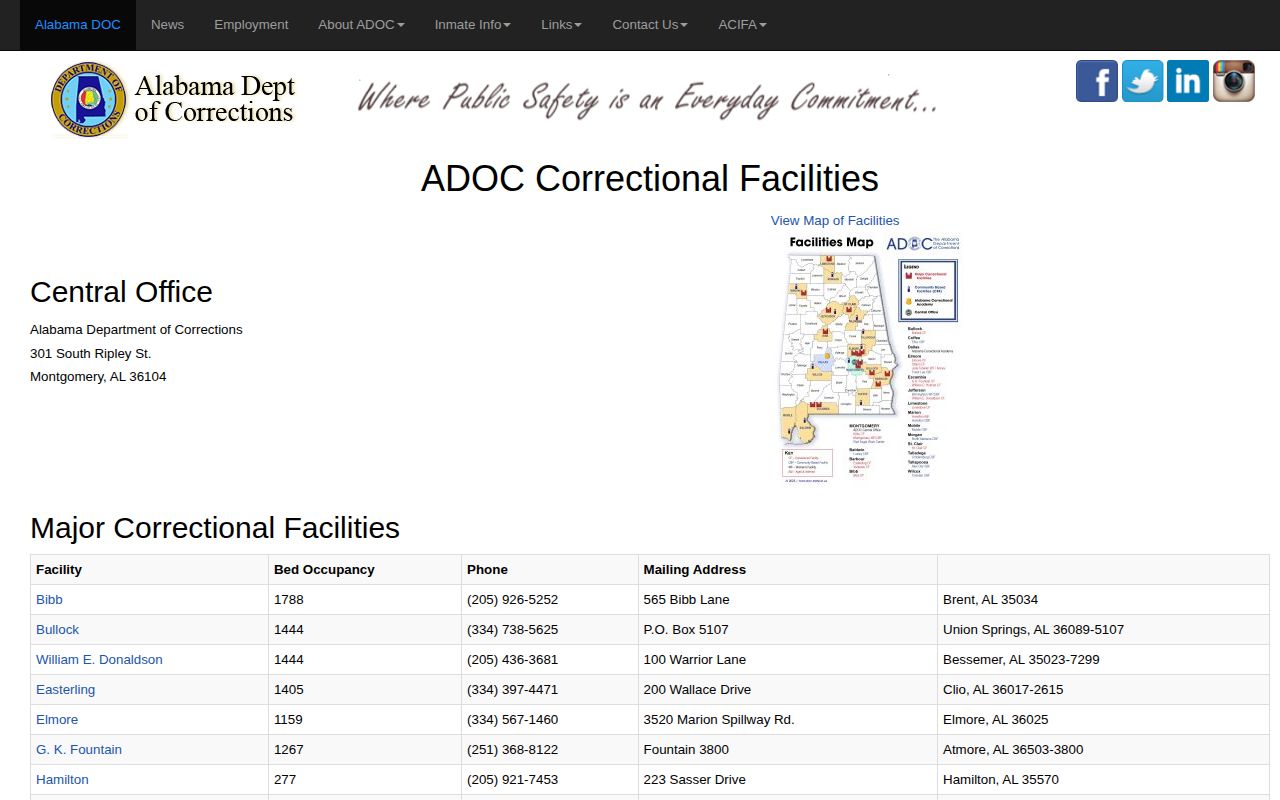
Facility location is only one part of the release path. Court sentence, ADOC status, and ABPP supervision can all be needed.
ADOC Search Limits
The most common mistake is treating the ADOC public search as a released-inmate archive. ADOC says its online database contains only currently incarcerated inmates and that historical data is not available online. A no-result search can mean the person has been released, the name is spelled differently, the person was never in ADOC custody, or the public search no longer carries that record. It should not be treated as a final answer without checking the sentence and custody path.
For Chilton County cases, the county court record can be just as important as the state search. The sentencing order, jail-credit entry, revocation order, split sentence, or probation order may explain why ADOC has a specific Minimum Release Date or why a person moved from county jail to state custody. If jail credit appears wrong, ADOC's own definitions point the question back to the sentencing county's circuit clerk.
ADOC search results answer current state custody first; release history often requires records requests and court documents.
Chilton County to ADOC Timeline
A state-prison timeline usually starts with a Chilton County court case, not an ADOC web search. The county jail may book the person before trial or sentencing. The court may impose a state sentence. The sheriff may then show a local release or transfer out of the jail. ADOC becomes the custody source after intake into the state system, and ABPP may become the supervision source after parole or mandatory supervision.
- Use the sheriff record to confirm the county booking and local release or transfer.
- Use the court record to confirm sentence, jail credit, and disposition.
- Use ADOC while the person is in state custody.
- Use ADOC records, Alabama VNS, or ABPP when public ADOC search no longer shows the person.
- Use the Clanton Field Office only when supervision is tied to Chilton County.
This timeline keeps a county jail release from being confused with a state-prison discharge.
ADOC Release Record Fallback
When the public ADOC search no longer shows a person, the next step is a records request, not a broad name search on the county jail roster. A useful ADOC request should include the person's full name, AIS number if known, date of birth, the Chilton County case or sentencing context, and the exact record sought. Ask for the public release or discharge date, sentence information, Minimum Release Date history, or public photo only when that item is needed and lawfully releasable.
ADOC's public-records rules also make the proposed use and Alabama residency attestation part of the form. That is different from the sheriff's hand-delivery process. Keep the two request paths separate so a state-prison release record is not sent to the county jail by mistake.