
Chilton County Projected Release Date
Alabama's key public term is not always "projected release date." ADOC defines Minimum Release Date as the earliest scheduled date an inmate can be released to probation or end of sentence. That is the nearest Alabama public-field equivalent to a projected or tentative release date. The label matters because users may search for a projected date while the official ADOC screen and definitions use "Minimum Release Date."
A scheduled date is not the same thing as an actual release. A scheduled date is a calculated point based on sentence, jail credit, sentence type, statutory credits, and restrictions. The actual release is the event that closes custody or moves the person to parole, probation, mandatory supervision, end of sentence, another agency, or another legal status. For a Chilton County jail booking, the sheriff's 48-hour release roster shows the actual release date and time after the event occurs, but it does not show a future good-time calculation.
Scheduled vs actual: A Minimum Release Date is a planned or computed date. The sheriff release record, ADOC discharge record, court file, or ABPP record confirms what actually happened.
Pretrial detainees need special care. If the person has not been sentenced, there may be no projected release date at all. Release may depend on bond, a judge's order, charge disposition, warrant status, or transfer. In that setting, use the current jail roster, sheriff release roster, and court case rather than trying to calculate a sentence date.
Find Chilton County Release Dates
The correct lookup path starts with the custody system. Chilton County Jail / Chilton County Detention Center is the county-custody source. ADOC is the state-prison source. ABPP is the parole, probation, and mandatory-supervision source. The court is the source for sentence, jail credit, bond orders, disposition, and probation orders. A full Chilton County released inmates search often uses all four.
- For a current county jail detainee, check whether the person is still on the Chilton County current roster. A pretrial person may have no set release date.
- For a recent county jail release, check the sheriff's 48-hour release roster for the actual release date and time.
- For an older jail release, request the booking and release record from the sheriff and identify the booking number, booking date, charge, and approximate release date if known.
- For a sentenced state prisoner, use the ADOC inmate search while the person is still in custody and look for the Minimum Release Date field where available.
- For sentence or jail-credit questions, use the Chilton County Circuit Clerk because ADOC defines jail credit as prepared by the sentencing county's circuit clerk.
- For parole, mandatory supervision, or probation after release, use ABPP records, hearing results, VNS, and the Clanton Field Office.
ADOC's public inmate search is current-custody only. ADOC states that historical data is not available online. That means the search can help before release, but it may fail after a person has completed ADOC custody. When that happens, use ADOC public records, Alabama VNS, ABPP, or court records to document the release path.
ADOC Minimum Release Date
Research Section 14 makes the ADOC field central to this page. The Minimum Release Date can change, and ADOC lists specific reasons. Disciplinary actions can take away good time. New cases sent by the circuit clerk can affect the date. Sentence changes sent by the circuit clerk can also move the date. For a Chilton County sentence, that makes the Chilton County Circuit Clerk relevant when a state-prison release date appears wrong because of jail credit or sentencing information.
ADOC's definitions page is the source for Minimum Release Date, jail credit, parole consideration date, parole status, sentence date, total term, consecutive sentence, concurrent sentence, and time served definitions. The ADOC terminology should be copied carefully into records notes because "minimum," "parole consideration," and "actual release" are not the same event.
| ADOC term | Release-date meaning |
|---|---|
| Minimum Release Date | Earliest scheduled release to probation or end of sentence, subject to change. |
| Jail credit | Time spent in county jail before sentencing, prepared by the sentencing county's circuit clerk. |
| Parole consideration date | A tentative point for parole consideration, not a guaranteed release date. |
| Parole status | Whether the person is on parole, delinquent, revoked, or in another parole-status category when shown. |
Chilton County Good-Time Rules
Alabama correctional incentive time is governed by Ala. Code Section 14-9-41. The statute sets the framework for deductions, classifications, exclusions, forfeiture, and sentence computation. It excludes several groups from receiving correctional incentive time, including Class A felony convictions, crimes causing death by deadly weapon, life or death sentences, sentences over 15 years, and child sex offenses as defined by statute.
For Chilton County jail sentences, Section 14-9-41 matters because it says the sheriff administers the section as it applies to prisoners in county jails. That does not mean the public 48-hour release roster shows a good-time calculation. The roster shows release date and time, booking date and time, charges, bond, booking details, and a photo/profile link. If the question is how the jail sentence was calculated, use the sentencing order, jail record, and sheriff or court records.
The correctional incentive time statute is the source for the good-time framework used in Alabama release-date calculations.
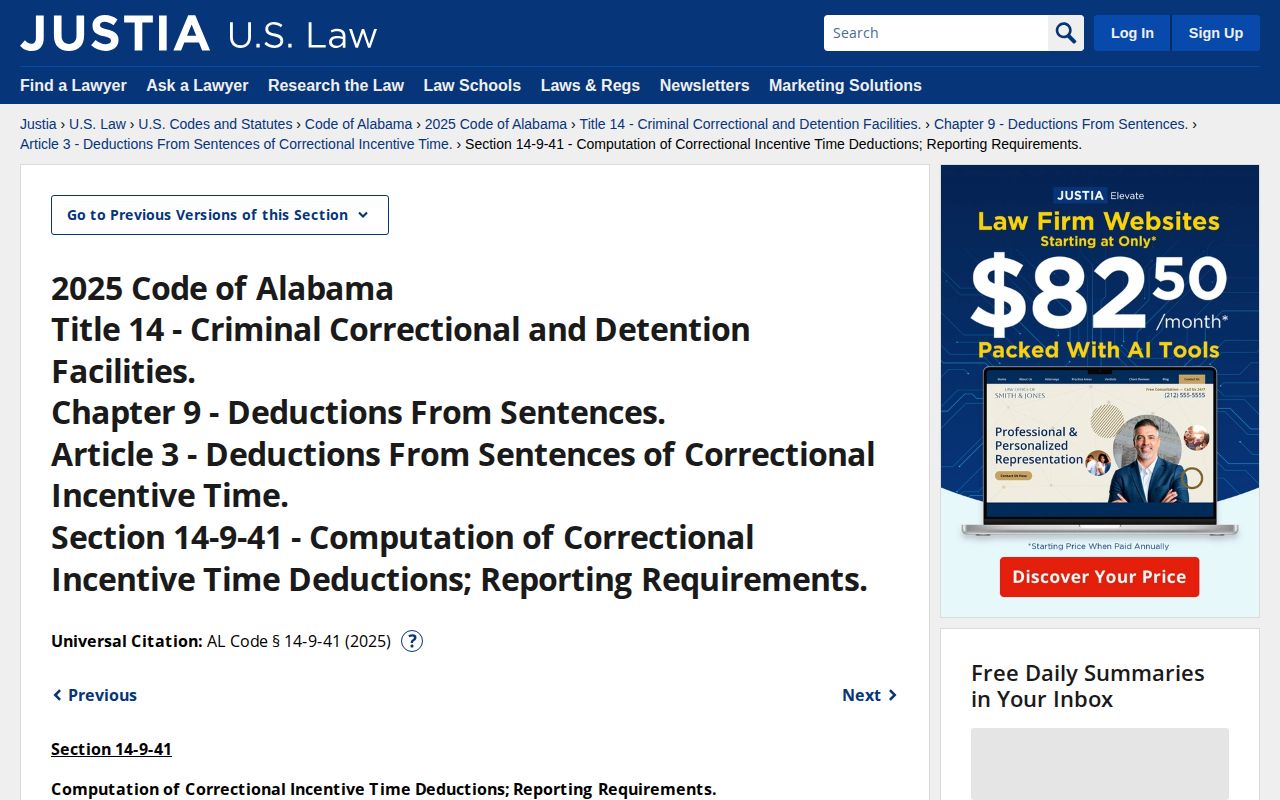
Use the statute to understand the framework, but use the agency and court records for the person's actual calculation.
Parole Timing in Chilton County
Parole timing is related to release-date research, but it is not the same as an end-of-sentence date. ABPP's FAQ says parole eligibility is calculated under Ala. Code Section 15-22-28(e). The calculation may consider sentence, crime, jail credit, ability to earn good time, time served, and court orders. Once eligibility is calculated, the inmate can receive a set date showing a month and year for processing.
For specified Class A felonies committed on or after March 21, 2001, the statute uses an 85 percent or 15-year rule for initial parole consideration, whichever is less. For other prisoners, initial consideration is generally after one-third of the sentence or 10 years, whichever is less, subject to exceptions and special rules. A set date or hearing date does not promise release. A parole grant can still require custody processing, conditions, victim notice, and detainer review.
The parole consideration statute is the source for the 85 percent rule and the other initial consideration timing rules.
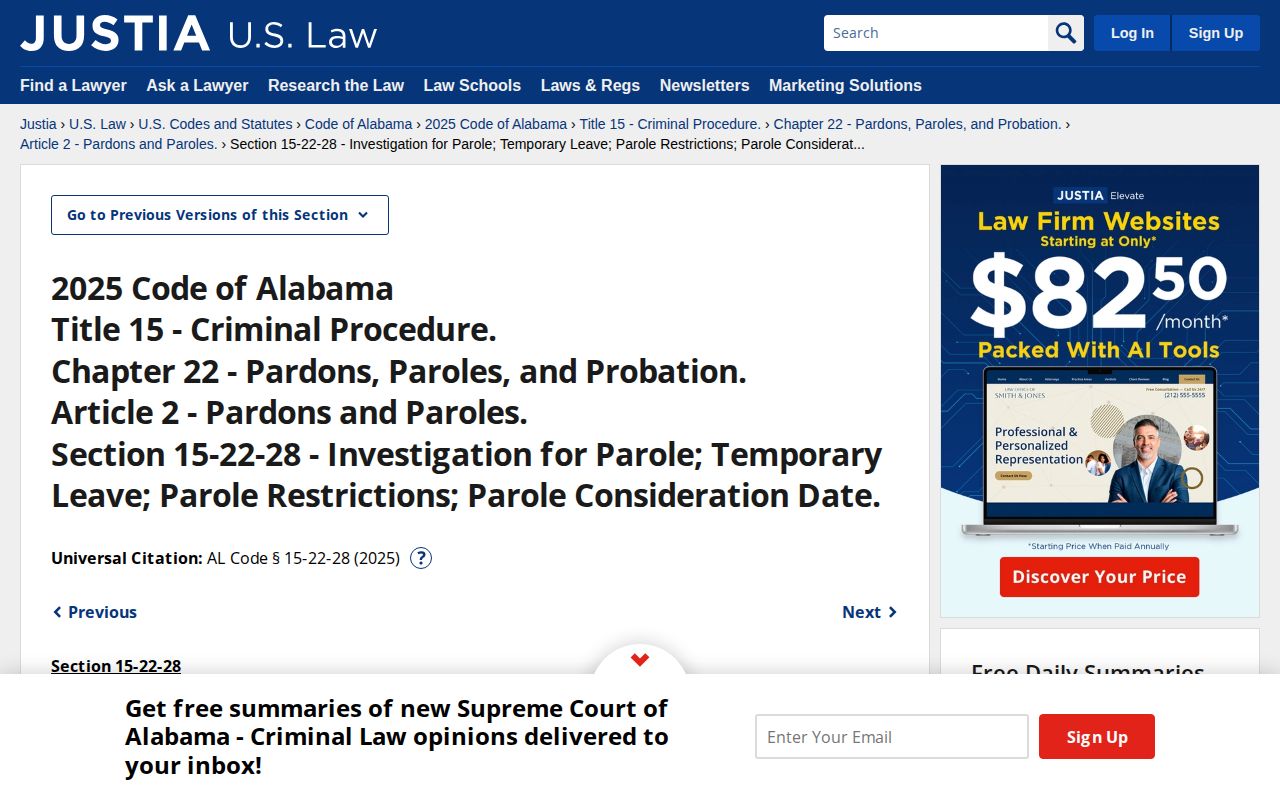
This statute explains parole consideration timing, while the actual release date still depends on custody processing and the person's record.
For local reporting after release, use Probation & Parole and the ABPP Clanton Field Office. For the projected date itself, use the ADOC Minimum Release Date, court sentence, jail credit, and records from the agency that has custody.
Mandatory Supervision Release Dates
Mandatory supervision is another reason a release date may not look like a simple sentence-end date. Ala. Code Section 15-22-26.2 requires release to ABPP supervision before the release date for certain ADOC confinement sentences. The ranges depend on sentence length: three to five months before release date for sentences of five years or less, six to nine months for more than five but less than 10 years, and 10 to 12 months for 10 years or more. The statute excludes some offenses and requires notice through the notification system before release to supervision.
ADOC's mandatory-supervision release material describes a rolling release process after victim notice. It also says ABPP processes released inmates and fits them with electronic ankle monitors in that release mechanism. This is not the same thing as an ordinary parole grant after a discretionary hearing, and it should not be described as a county jail release.
The mandatory supervision statute is one source for release-to-supervision timing.
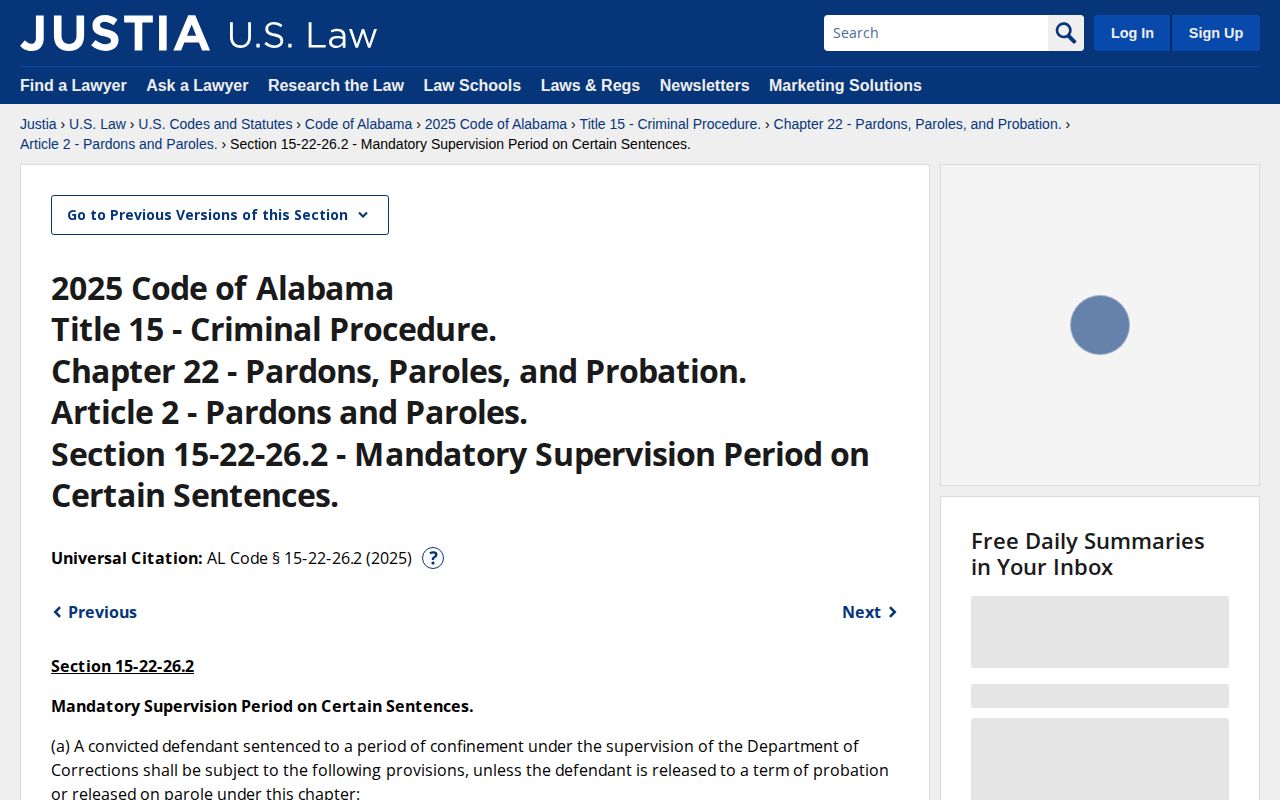
When mandatory supervision applies, the release question shifts from jail timing to ADOC, ABPP, VNS, and statutory notice.
Why Chilton County Dates Change
Research Section 19 angle O is the main local quirk for this page. ADOC says the Minimum Release Date can change due to disciplinary good-time loss or because the circuit clerk sends new cases or sentence changes. For Chilton County, that means the circuit clerk may be part of a release-date dispute even when the person is in state custody. The jail record alone is not enough to solve sentence-credit questions.
| Change factor | What can happen | Where to confirm |
|---|---|---|
| Good-time loss | Discipline can reduce or forfeit incentive time and move the date later. | ADOC records and institutional records. |
| New case | A new case from the circuit clerk can change sentence computation. | Chilton County Circuit Clerk and ADOC. |
| Sentence change | An amended order or corrected sentence can move the date. | Court file, sentencing order, and ADOC. |
| Detainer or hold | Release from one agency may become transfer to another authority. | Sheriff record, court record, BOP, ICE, or receiving agency. |
| Parole or supervision | A hearing decision or mandatory supervision law can change the path out of custody. | ABPP, ADOC, and Alabama VNS. |
Note: A transfer from Chilton County custody to ADOC, federal custody, ICE, or another agency is not the same as release from all custody.
Confirm Chilton County Release Dates
Use notifications for timing, but use records for proof. VINELink Inmate Search can help with release or custody-change notice when the person is covered. Alabama VNS can help with certain ADOC-sentenced offenders. ABPP can help with parole, probation, or mandatory-supervision routing. The sheriff's released roster confirms a recent county jail release event, and the sheriff records process is the fallback after the 48-hour web window expires.
For a formal request, identify the exact record needed. For the sheriff, ask for the booking and release record tied to the booking number, booking date, release date, charge, and name. For ADOC, use Form 023-A and include inmate name, AIS number if known, date of birth, and the specific release or sentence record requested. For the court, use the case number or party name and ask for the disposition, sentencing order, probation order, revocation order, or case-action entries relevant to release.